SAB 28 NOV
11:35
12:20
Monterosa
RuleMCP: guardrails at your service
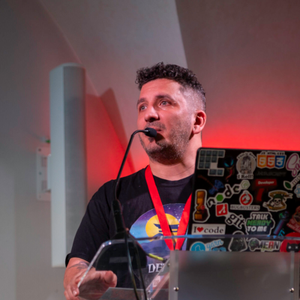
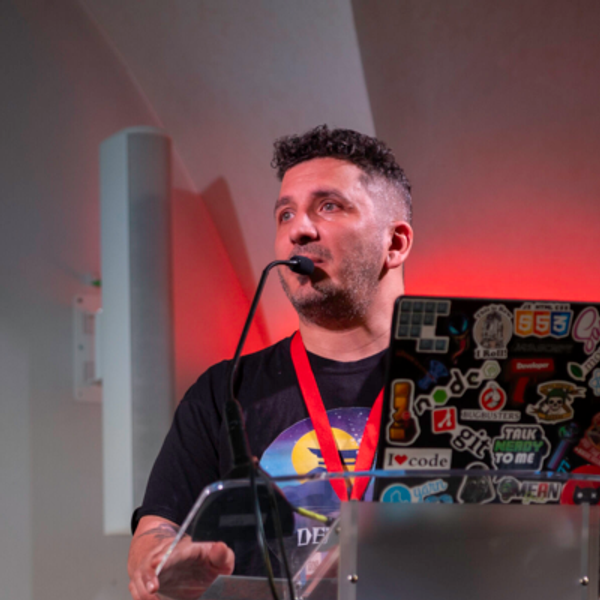
Emiliano Pisu - Senior Frontend Engineer ✨ AI Product Engineer 🎨 Design Engineer ♿️ Accessibility WCAG Advocate 🎤 Speaker 👨🏻🏫 Mentor
Engineering standards are easy to put in a prompt. Keeping a coding agent aligned with them across code reviews, context limits, and resumed sessions takes a system that can check what actually happened. This talk explores six months of building "rule-mcp", a local MCP server written in vanilla JavaScript for Node.js using MCP 2.0 SDK that turns engineering knowledge into actionable guardrails. Around ~100 extensible skills expose guidelines, conventions, and project knowledge as tools, with BM25 retrieval selecting those relevant to the task and repository. Review personas structure security, privacy, accessibility, and performance checks, while a local cache reuses validated responses and recurring snippets. Continuity gets the same scrutiny. A shared slash-command workflow connects atomic conventional commits, architectural decision records, and compressed session handoffs. Before work resumes, repository claims in the handoff are verified against the live branch, commits, and files. The server makes zero LLM calls. We will examine how it cooperates with coding agents in a validation and correction loop, and where deterministic checks can enforce specific requirements. Output compression follows explicit rules, with structural validation and rollback when a transformation breaks its constraints. A built-in flight recorder makes the overhead visible: across measured sessions, the combined MCP footprint accounts for 1% to 6% of the context window. We will also examine how compression measurements challenged the original assumptions and shaped the implementation. Attendees will leave with practical patterns for turning coding conventions into verifiable checks, preserving trustworthy context between sessions, and measuring the cost of the safeguards they introduce.